

Create affordable housing for Broward’s teachers? A new idea takes shape with old school site
South Florida Sun Sentinel | By Scott Travis |
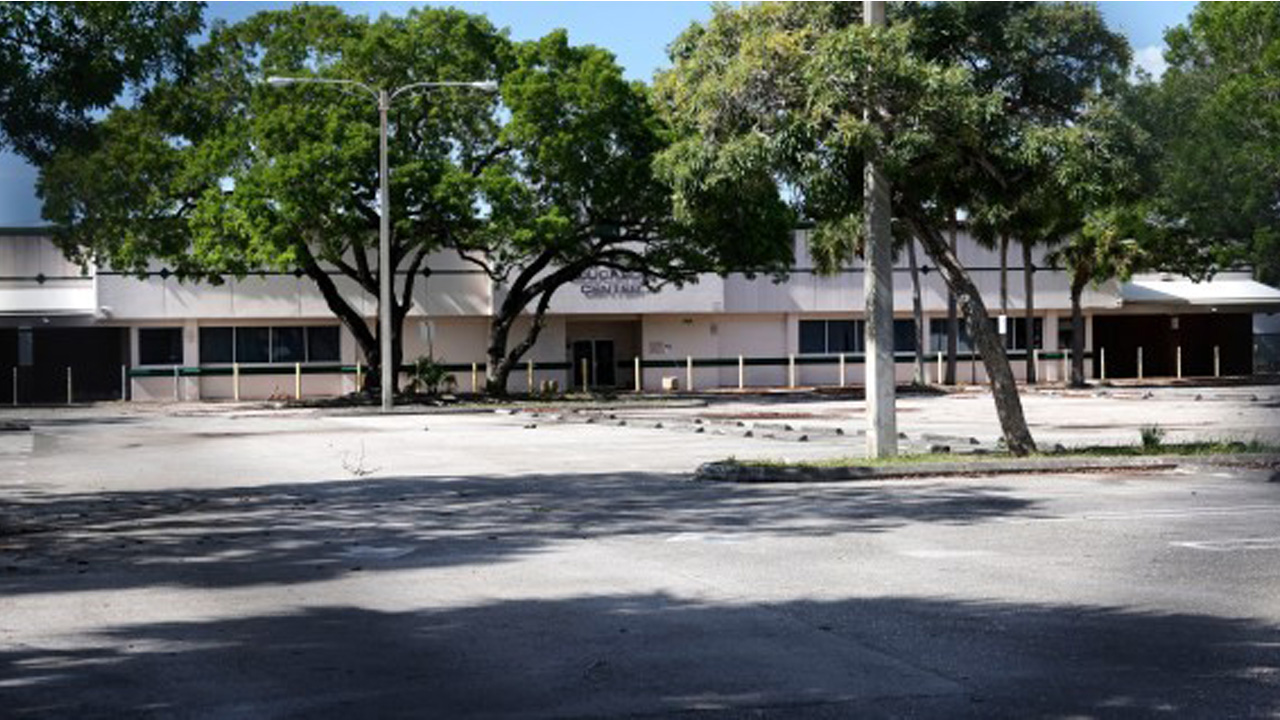
An abandoned alternative school in Pompano Beach could get a new life as affordable housing for Broward’s teachers.
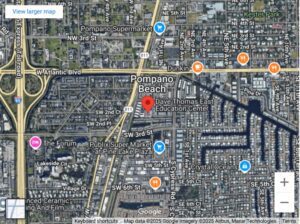
The school district wants to create workforce housing for district employees at the 2.8-acre site of Dave Thomas East Education Center, which is at 180 SW 2nd St. in Pompano Beach. The school closed in 2021 for repairs but was permanently boarded up in 2022 “due to significant structural defects that would be cost-ineffective to repair the facility,” according to a district document.
Now, the site could become part of the city’s downtown redevelopment efforts. Pompano Beach has a $2 billion plan to create a pedestrian-friendly area at Dixie Highway and Atlantic Boulevard with shops, residences, offices, a hotel, restaurants, a new City Hall, a new civic center and a 600-acre parking garage.
“The city is trying to create a downtown that’s very robust, mixed-use and walkable, and our property is very well positioned,” Chris Akagbosu, director of facility planning and real estate, told the School Board at a June 10 meeting. “It’s walking distance, right across the street, so I think it’s a great opportunity.”
The area also is close to a planned station for a commuter rail project known as Coastal Link, making the school district’s proposed project a good fit, Pompano Beach Mayor Rex Hardin told the South Florida Sun Sentinel.
“It works out fine with our idea of our downtown: more housing, more density in that area,” Hardin said. “We want to get more density in that area to help us use the mass transit that is coming eventually.”
The district is proposing a public-private partnership where it would enter into a long-term lease with a developer who would replace the school with rental housing, including affordable units for district staff, officials said.
City regulations limit affordable housing to half of any new development. One option would be for the district to enter a long-term lease and require that half the units to be affordable housing, officials said.
But School Board members expressed more interest in another proposal, forgoing any revenues from the lease and instead applying them directly to subsidize the cost of market-rate housing. This option would allow the units to be 100% rented to district employees, Akagbosu said.
This housing development could help the district address two problems. First, decades of enrollment declines have created a lot of extra space in district buildings, causing the district to consider closing schools and finding new uses for the facilities.
The second issue is that the cost of housing has become unaffordable for many teachers and district employees, officials said. Broward single-family home prices more than doubled in a decade, from $290,000 in March 2015 to $635,000 in March of this year, according to a district presentation.
The average monthly rent for a two-bedroom unit is now $2,751, which is more than half the monthly income of an average teacher making $60,000 a year. Many financial experts recommend spending no more than 30% of gross income on rent.
“Even if someone was making a $100,000 salary, it’s still hard to go pay a $3,000 rent,” Broward Teachers Union President Anna Fusco told the Sun Sentinel. “All these beautiful apartments getting built, you can’t get in there for under $3,000.”
School Board members said at the June 10 workshop that they would like to focus on employees who make 80% or less of the county’s median income, which is currently $89,100. If the development opened today, rent for affordable housing units would be capped at $1,478 for a studio apartment, $1,583 for a one-bedroom unit and $1,901 for two bedrooms, a district document suggests.
Several other districts have launched workforce housing programs. Miami-Dade County is building West Brickell Middle School, which in addition to serving 610 students, will have 10 residential one-bedroom apartments for Miami-Dade teachers.
Pinellas and Manatee school districts have also been developing proposals, a district document states.
Broward has received artist renderings of different options from DPZ CoDesign, a Miami-based firm.
“The site is exciting because it’s a very good location,” Galina Tachieva, managing partner of DPZ, told the School Board. “It is kind of embedded in a residential neighborhood,” with a townhouse development on the south end and some condominiums on the east side.
One of DPZ’s options would have 96 units in three multi-story apartment buildings, with each unit building abutting an outdoor court that could be used for parking and activities.
A second design would include 57 patio homes, each with their own garage and private patio. A third concept would be 44 cottages, each including a private courtyard.
School Board members voiced excitement about the idea at a recent board meeting, although they haven’t decided whether they would prefer one of the options presented or possibly one that can hold more units.
“I think it’s fantastic and exactly what we need,” Board member Maura Bulman said at the meeting. “I really like the design. I understand we have to maximize our capacity, but I also think it should be a nice place to live. We should be matching the surrounding environment instead of building a concrete jungle on our little piece of land.”
Board member Allen Zeman said he supports the idea but voiced concern about having only a few dozen units available for a district that employs about 27,000 people.
“Is that going to create feelings of winners and losers? How are we going to do that in a way where we’re not doing more harm than good in terms of creating 26,920 losers and 80 winners?”
Wanda Paul, the district’s chief operating officer, told him she anticipates more housing partnerships in the future.
“We have other vacant land and green space that we may be able to do other projects with, but as with other things, we have a finite amount of properties, so yeah, we’re not going to provide housing for 27,000 employees. That’s just our reality,” she said. “But what we can do is come up with a fair system to accommodate those who are in the greatest need.”
Not everyone is enthusiastic about the idea. Several teachers blasted the proposal on the Facebook group Concerned Citizens of Broward County.
“Just pay the employees. How much money will it take to transform this building into affordable housing?” one teacher wrote. “Also, who wants to live with other employees. It just sounds so odd.”
“Have [Broward Schools] as my landlord? No, thank you,” another teacher wrote.
Others noted Broward’s poor record of constructing and maintaining school facilities.
But Board Chairwoman Debbi Hixon said the district will not be involved in the construction or operations.
“People will say, and they’re correct, we’re not in the business of building houses and managing housing. And I don’t want us to detract from our job, which is to educate students,” she told the School Board. “The only thing we have to do with it is making a contract to lease the land to a developer.”