

Will Florida make the Bible required reading in public schools? What to know
Miami Herald | By: Lauren Costantino | July 14, 2026
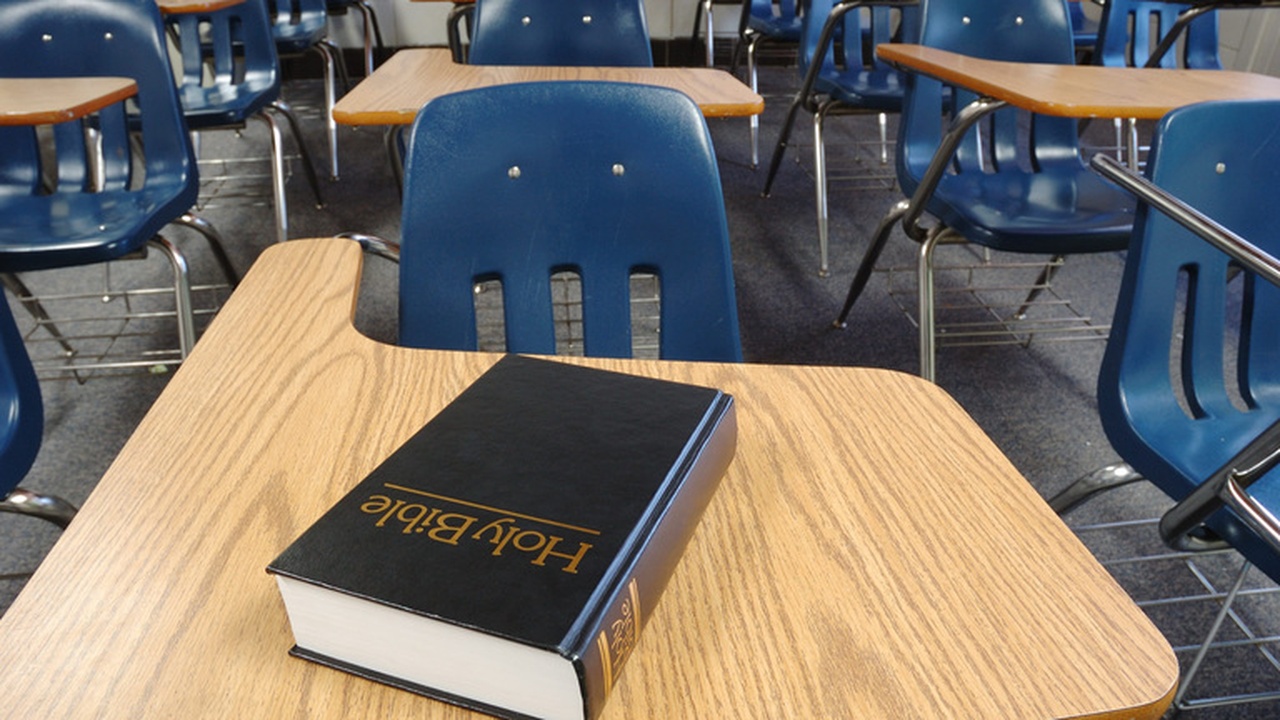
After the Texas Board of Education approved certain Bible passages as required reading for public school students last month, Florida education officials said the state could be open to similar policies. Florida has often followed Texas’ lead on conservative education mandates. The Florida Department of Education told the Miami Herald that “it would be nearly impossible for students to have a complete understanding of the Founding Fathers without being familiar with the great books and writings that inspired many of their principles and ideals — and that includes the Bible.”
But Florida currently doesn’t have any similar mandates and the Department of Education did not indicate if this was a priority.
Here’s what else to know:
The Republican-controlled Texas Board of Education approved a mandated reading list last month for the state’s 5 million public school students that includes New Testament excerpts and Biblical stories like Jonah and the whale, alongside standard literature and historical American texts.
The required readings will affect elementary, middle and high school students starting in the 2030-31 school year and appear to be the first state-mandated Bible curriculum in U.S. public education, according to The Associated Press.
Critics argue that religious stories should not be explicitly taught in public schools attended by students with a variety of different religious beliefs. Supporters argue that the required readings accurately reflect Judeo-Christian values that the U.S. was founded on.
Florida has previously followed Texas on education policy, adopting a religious chaplain policy in 2024 a year after Texas did. A Senate bill this year that could have opened the door to a Bible-based curriculum died before the end of session.
Florida Attorney General James Uthmeier issued a legal opinion in June affirming that school districts must accommodate parents who want their children absent from school for religious instruction, writing that it allows parents to “honor their sacred duties to raise their children in the faith.”