


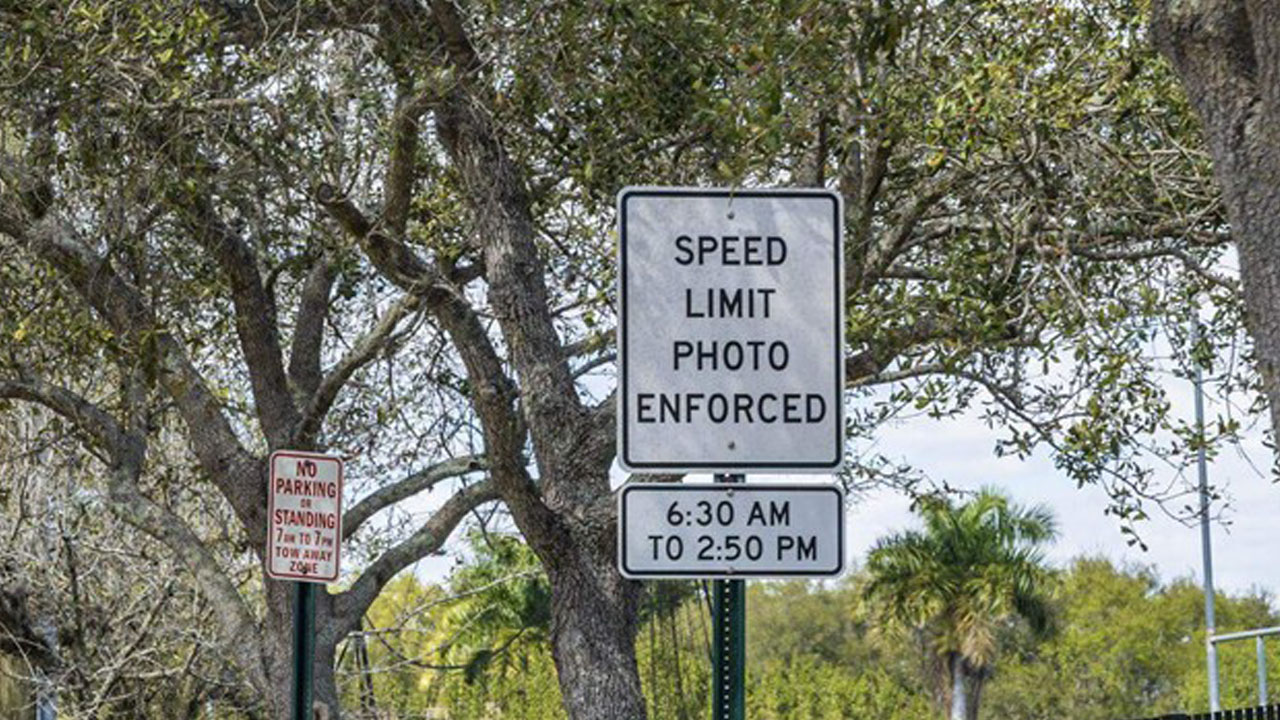
Miami-Dade school cameras now issuing far more speeding tickets than police do
Miami Herald | By Douglas Hanks |
If you got a speeding ticket in Miami-Dade County this year, the citation likely came from a privately run speed camera outside of a school, according to new data from the local court system.
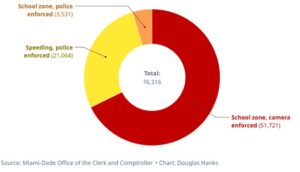
Launched in Florida two years ago after a change in state law, the cameras accounted for 68% of all Miami-Dade speeding tickets during the first three months of 2026, according to data provided to the Miami Herald by the Office of the Clerk and Comptroller.
Of the 76,316 speeding citations processed by that office between January and March, fewer than 25,000 were issued by police. The rest — 51,721 citations — started with automated cameras run by private companies under contracts with local governments in Miami-Dade, according to the data.
School-zone cameras are now generating most of the speeding tickets in Miami-Dade County
In the first three months of 2026, automated speed cameras set up outside Miami-Dade schools generated 68% of all speeding tickets in the county, according to data provided by the County Clerk and Comptroller’s Office.
The numbers are the latest metric on how prolific the cameras are at catching local drivers speeding — a system that critics say is more focused on profits than concerns about dangerous driving around schools. The cameras operate throughout the school day, meaning that people driving by when no children are outside are still subject to automated speeding violations generated by a camera.
Local police are required to review the footage to approve the violations, which carry a $100 fine. Drivers who don’t pay the fine are then subject to a speeding citation, which they can fight in court.
“It is a money grab being disguised as a safety program,” said Ted Hollander, a lawyer with the Ticket Clinic who has represented people fighting school-zone citations across South Florida. “What is coming next? Will there be cameras on every corner?”
The Ticket Clinic provided the Herald with data showing the school-zone camera citations were now dominating Miami-Dade’s traffic court proceedings — numbers that match the figures from the Office of the Clerk and Comptroller.
Those figures show police do still issue their own citations for speeding in a school zone. But they’re far less efficient than the cameras, with only 3,531 school-zone speeding citations coming from police officers.
Under Florida law, the speed cameras can generate violations if a vehicle is going more than 10 mph over the speed limit at any time of the school day. During pick-up and drop-off times, the speed limit is 15 mph, meaning the cameras are targeting anyone going 25 mph or faster during those time periods. Outside of those time periods, the speed limit reverts to the posted speed limit for that road or street, and going 10 mph over that regular speed limit triggers a violation from the cameras.
The private companies that operate the cameras keep a share of the penalty revenue, with the rest going to state and local governments. For Miami-Dade County’s own network of cameras installed around schools outside of city limits, the Chicago-based company RedSpeed received about 20% of the $17 million in fines the devices generated in the first half of 2025.
Backers of the programs say the spike in citations from the new cameras show that speeding around schools is a significant problem. They also call the cameras effective at training drivers to slow down outside schools.
“Nine in 10 drivers who receive a notice of violation don’t get a second, which is a clear indicator that the use of technology effectively prevents speeding in school zones and creates a safer environment for students,” RedSpeed spokesperson Amanda Bevis said in a statement to the Herald. “Without photo enforcement technology, drivers will continue to fly through school zones, putting our kids in danger.”