

A year later, new Broward schools watchdog hasn’t yet released findings of investigations
South Florida Sun Sentinel | By Scott Travis |
A year after the Broward School District contracted with the county’s Office of Inspector General to help it root out waste, fraud and abuse, the watchdog agency has yet to produce any reports identifying problems.
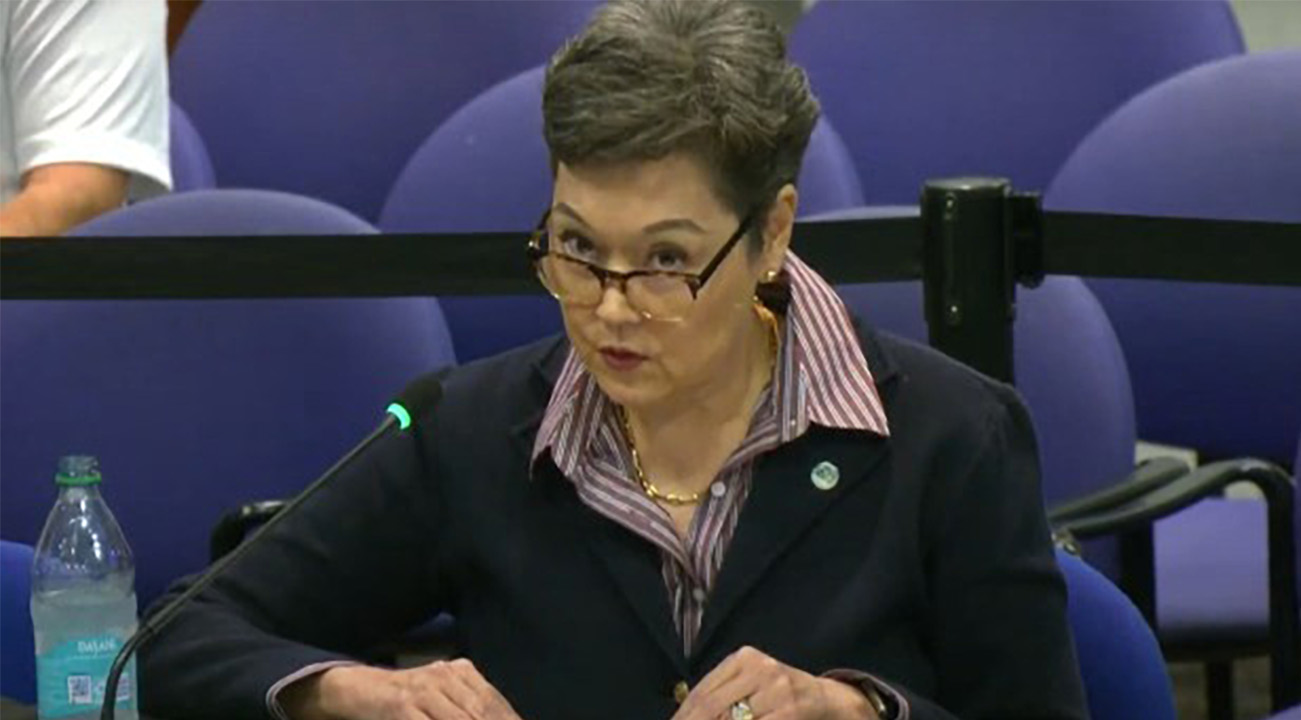
Inspector General Carol “Jodie” Breece told the South Florida Sun Sentinel that her office currently has five active cases it’s investigating involving the school district and has reviewed more than 130 tips.
But the office has released nothing so far that recommends changes to a school district that has been dogged for years by complaints of corruption and mismanagement. Most Broward School Board members say the inspector general’s progress has been too slow, and they are even considering severing ties.
Breece said her office takes on complex cases, and the investigations are intended to be thorough, not quick. They can involve the review of thousands of financial transactions. Some may take up to two years, she said. She said she expects the Office of Inspector General “to show some of our work” during the current fiscal year, which ends Sept. 30.
“We do understand that some people might want more immediate results from the OIG and want us to work faster,” Breece told the Sun Sentinel. “I don’t think that the School Board as a whole or administration has an expectation that we’re going to be super speedy in addressing specific questions that they have, because that’s not our model. That’s not what we do.”
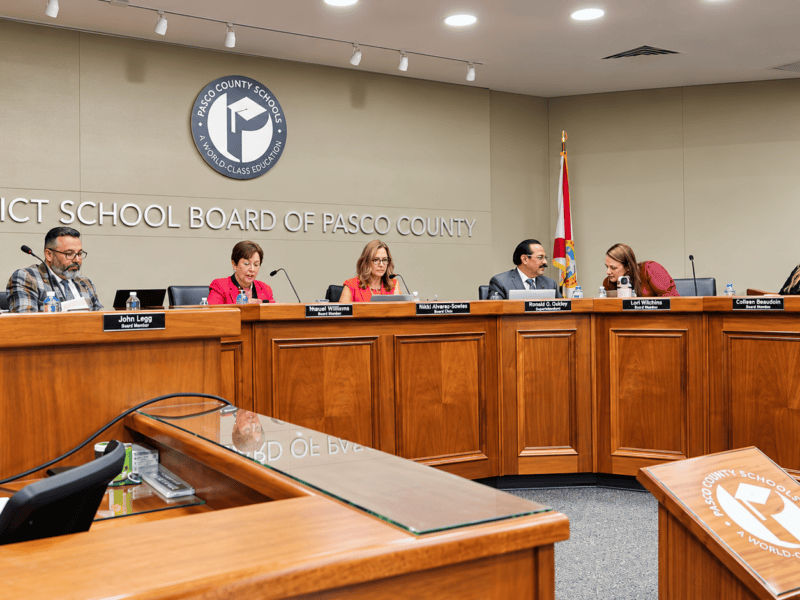
However, six of nine School Board members — Lori Alhadeff, Adam Cervera, Debbi Hixon, Jeff Holness, Nora Rupert and Rebecca Thompson — told the Sun Sentinel they would be open to a new type of oversight.
“The Inspector General’s office was created to ensure independent and thorough review, and its effectiveness should always be evaluated to make sure it’s serving our district well,” Alhadeff said.
Board Chairwoman Sarah Leonardi and Board member Allen Zeman said they support keeping the current arrangement, while Maura Bulman said it’s too soon for her to know “because we haven’t even gotten one report back.”
The county’s Office of Inspector General has been around since 2010. But for years, it only provided oversight to the county government and local cities. Following years of turmoil in the school district that included the arrests and removals of some School Board members, as well as frequent administrative shakeups, the School Board agreed in 2024 to ask voters to add the school district to the list of government bodies that fall under the inspector general’s watch.
Voters approved a required change to the county’s charter to include the School Board, and the contract was signed in January 2025. But the relationship is voluntary, and either the School Board or the Office of Inspector General can terminate with 30 days’ notice and an agreement to complete any pending cases.
Hixon said she’s frustrated enough now to consider cutting ties.
She said she had hoped the inspector general’s office would take on cases referred by the School Board and provide timely responses that would help the district improve. Instead, she said the office won’t provide details about ongoing cases or even confirm the existence of specific investigations, conditions that Breece said are required under state law.
“It isn’t about not wanting more accountability, because I clearly supported it before, but I feel like we’re just throwing away all this money, which we obviously need for other things,” Hixon said. “What value does it bring if you can’t get the investigations and find out where you need to look to rectify issues?”
As the district faces about $100 million in painful cuts, Holness said he’d like to find ways to save money. The inspector general contract is about $1.2 million a year.
“Exploring cost-saving measures in all areas, considering our district’s financial concerns, is imperative to the future success of this district,” Holness said. “In this case, it may be worth revisiting.”
Breece said the operations haven’t been expensive so far. She said her office was still hiring staff and getting acquainted with the school district and didn’t use most of the $659,810 the School Board approved for an initial eight months in 2025. The office credited the district with about $500,000 for the 2025-26 fiscal year.
Cervera said he’d be interested in comparing costs with the inspector general’s office at the Palm Beach County School District. That inspector general there reports to the School Board and only investigates matters related to the school district.
Leonardi said she supports the current arrangement.
“The voters spoke loud and clear that they wanted this additional layer of accountability and transparency,” Leonardi said. “I have confidence in the OIG’s ability to conduct accurate and thorough investigations.”
But several board members said they have no confidence that the inspector general will investigate matters in a timely manner. This has led them to find other ways to conduct investigations or make decisions without key information, they said.
Last May, the School Board was expected to approve a $115 million contract for laptops that would allow the district to distribute them to all students. But Superintendent Howard Hepburn pulled the item the day of the meeting, citing a complaint he had received about the bidding process.
Hepburn referred the matter to the inspector general’s office. A Sun Sentinel review of public-records requests made by the office confirmed it was looking into the matter. Board members decided at a July meeting to delay the laptop initiative until the inspector general’s review was complete.
“I’m hoping we get some follow-up or closure from the I.G. in a couple of weeks,” Hepburn told the School Board on July 29.
The next day, Chief Auditor Dave Rhodes contacted Breece to see if she could provide an update. In her response, she declined to confirm a laptop investigation was happening, citing state statute.
“It is our understanding that the Board is considering delaying action on a matter until the resolution of a presumed OIG investigation,” Breece wrote to Rhodes. “While the Board would certainly be at liberty to do so, we would not encourage any entity to delay a business decision with the hopes that an OIG investigation will timely result in helpful information.
She told Rhodes her office would “not abbreviate our investigations, regardless of the existence of external circumstances, as doing so can jeopardize the integrity of our work product.”
The School Board agreed in September to move forward with the contract.
The investigation may still be active as of mid-January, as it was not included in a list of closed inspector general’s cases the Sun Sentinel received through a public-records request.
The cases become public after they are closed, regardless of whether there are any findings.
A review of 130 closed cases found that the inspector general’s office conducted initial work on about eight cases before deciding the allegations were unfounded. Another six were referred to other agencies.
The vast majority were rejected without investigation because they either fell outside the inspector general’s jurisdiction or the office determined that even if true, the allegation didn’t demonstrate gross mismanagement, misconduct or another violation the office might investigate.
The inspector general’s office may review a case the School Board discussed on Jan. 6.
The School Board had recently learned that all of the district’s highest-paid administrators, except for Hepburn, received bonuses of up to $14,000 from referendum money that was intended to benefit teachers and low-paid staff. The board voted to stop the payments to the highly paid employees.
Board members debated whether to turn the matter over to the inspector general’s office for review. Hixon argued at the meeting that wasn’t sufficient. The referendum has to be renewed in November, or the money will go away, so Hixon said the board needed recommendations in a timely manner about how to ensure these types of issues don’t slip past the School Board again.
“I don’t necessarily disagree with sending it to the I.G. The problem is they pick and choose,” Hixon said at the Jan. 6 meeting. “We’re still waiting on something we sent a year ago. We don’t even know if they’re investigating it.”
It’s a sentiment that resonated with Nathalie Lynch-Walsh, a parent volunteer who has served on several advisory boards and advocated for more than a decade for the district to join the Office of Inspector General.
“I totally understand the frustration of waiting for the I.G. Someone needs to light a fire over there,” Lynch-Walsh told Hixon at the meeting.
The School Board decided to assign the district’s chief auditor to quickly review the referendum bonuses, while also alerting the inspector general’s office.
Breece said she understands the School Board may need to make those kinds of decisions.
“I would say there are answers that you need right away, and you should do what you need to do to get those answers, but not to look to the OIG for a quick fix to any issues that the School Board is facing right now,” she said.
She also urged patience.
“You will get good results from this agreement,” she said. “You’re going to find out about conditions you didn’t know about and recommendations that you can implement to make things better.”
Board member Zeman said he believes the district is getting results from the inspector general, even if no investigative reports have come out yet. He said the presence of government watchdogs serves as a deterrent to employees.
“Everyone in government who has worked in a place where there is an inspector general fears them, as they should,” Zeman said. “They have the ability to take depositions. They have the ability to refer for criminal prosecution. They’re fiercely independent. I think the fact that we have one is a big deal.”