

Florida on verge of letting booster clubs pay high school coaches
Tallahassee Democrat | By James Call | March 10, 2026
Key Points:
- The Florida Legislature passed a bill allowing high school booster clubs to directly compensate coaches.
- Supporters argue the measure will help Florida schools compete with neighboring states that offer higher pay.
- Opponents raise concerns about creating pay disparities between schools in wealthy and poor areas.
The Florida Legislature has overwhelmingly passed a bill to allow high school booster clubs to provide direct, additional compensation to coaches.
Reps. Shane Abbott, R-Defuniak Springs, and Adam Anderson, R-Palm Harbor, teamed up with Florida State and NFL veteran Sen. Corey Simon, R-Tallahassee, on a measure that loosen regulations on how booster money can be spent.
The idea is to enable public schools to significantly increase compensation for coaches and advisors of extracurricular activities such as football, volleyball, debate clubs and theater.
Gov. Ron DeSantis signaled support for the measure after Simon recruited former FSU national championship coach Jimbo Fisher and NFL Hall of Famer Cris Carter, currently the director of player engagement at Florida Atlantic University and a former high school coach, to ask lawmakers to support the bill.
After the measure cleared the Senate on a unanimous vote, Abbott and Anderson switched the House companion for Simon’s proposal (SB 538) and pushed it across the finish line March 9 with a 104–6 House vote.
Rep. Robin Bartleman, D-Weston, was one of the ‘no’ votes: She said it represents misplaced values, would lead to a two-tier pay system for teachers and lead to fairness violations under federal law that prohibits sex-based discrimination in educational programs.
“You’re going to create ‘have’ and ‘have not’ issues because schools in high socioeconomic areas will be able to raise more money in their booster clubs. I just think this sends the wrong message if we’re putting all this emphasis on a coach … this isn’t what education is about,” Bartleman said.

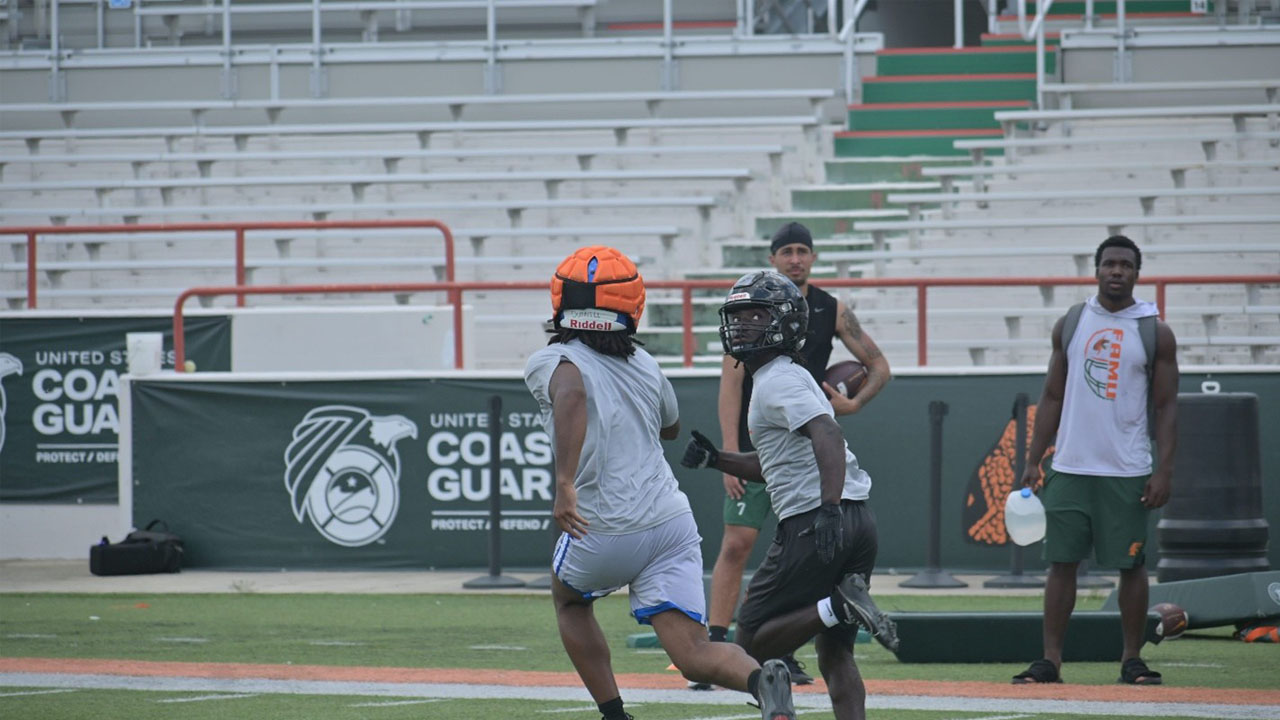
Football stars show support for increase coaches pay in Florida schools. Jimbo Fisher was among those who participated in a press conference in support of HB731.
Abbott countered that the measure recognizes what is already occurring in high school sports and erects guardrails to preserve fair athletic competition.
“I think this increases parity,” Abbott said. “This is going to help the 1-A (smallest enrollment, mostly rural) schools just as much as it does the big schools that have the money because they’re now going to be able to pay coaches additional money that they weren’t able to, which is better than what they had.”
Supporters argue the measure’s provisions on compensation will be a game changer for high school athletics.
High school coaches currently are paid stipends for their out-of-classroom time with students. A legislative analysis found that stipends can vary widely: A football coach in Broward County receives a $3,000 supplement, while one in Collier County receives $7,000.
Meanwhile, head football coaches in neighboring states are paid significantly more – many receiving more than $100,000 annual salary, with one Georgia coach making $219,214.
Simon, whose 13-county district borders Georgia, said by enabling districts to classify coaches as administrative personnel, the legislation levels the playing field for Florida schools.