

Leon schools face $30 million deficit without sales tax extension
If Leon County voters don’t approve the school district’s half-penny sales tax extension which covers construction, maintenance and transportation, the district could be looking at a deficit of about $30 million next school year.
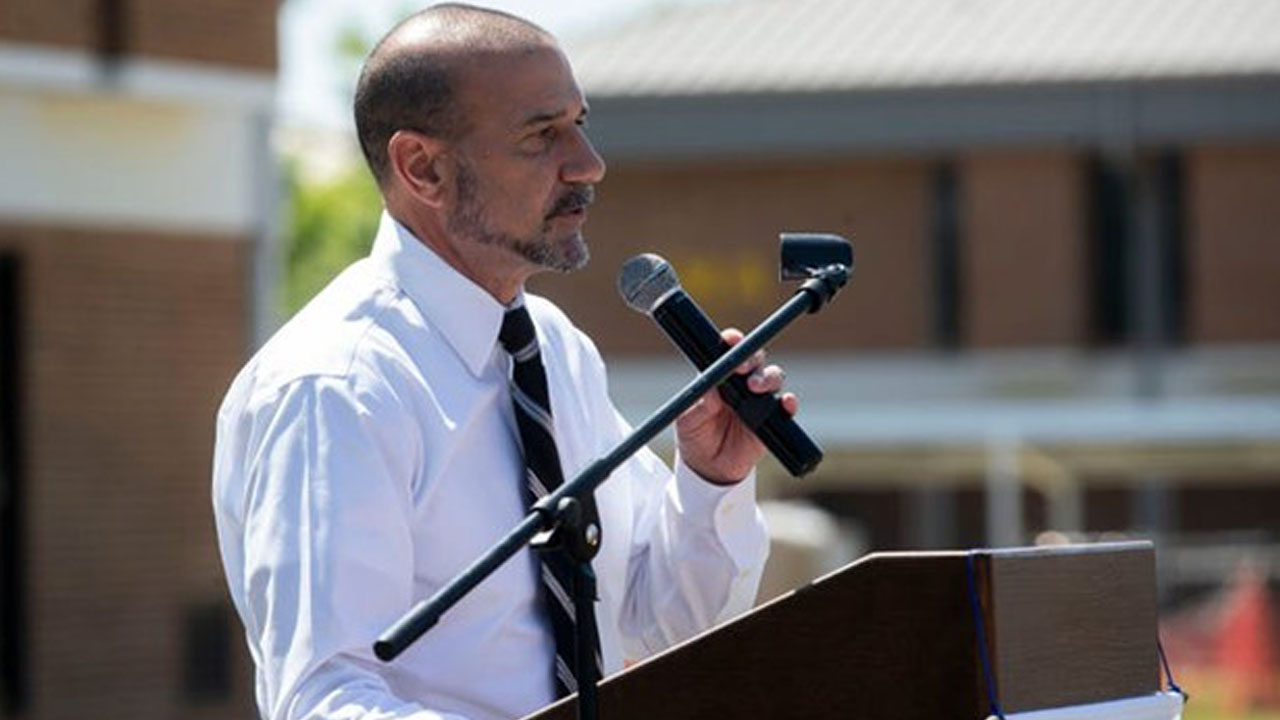
Superintendent Rocky Hanna said the board will have to approve the ballot language for the initiative by May and send it to Leon County commissioners for approval to add it to the Nov. 3 ballot.
“I would never take anything for granted and we need to approach this like it’s the inception,” Hanna told the board during an agenda preview meeting April 13.
To be clear, state law prohibits the board from promoting or organizing campaigns in favor of the sales tax extension.
The issue will be further discussed at the 6 p.m. April 14 meeting when the board and the final vote is April 28.
For months now, the Leon County School District has worked through what Hanna has called a “financial crisis” due to declining enrollment, school choice and state funding levels that have steered public dollars to charter and religious schools and scholarships.
In response, the board has voted for sweeping cuts to administrative positions, arts and sports funding and partnerships with community groups.
Separately, the board is also entertaining the possibility of collecting a separate property tax to raise money for teacher salaries. The board has not formally discussed the measure in workshops or in formal business meetings. It is unclear when the board will decide on the additional tax.
The half-penny sales tax, meanwhile, has generated an average of $30 million a year since its implementation in 2002.
In 2012, the initiative was first renewed by voters with a 68% approval. It was changed in 2012 to increase the renewal period from 10 to 15 years.
The renewal vote in 2026 comes as many Florida taxpayers are feeling squeezed. State lawmakers have advocated to rein in local government spending and property taxes, which typically help fund school budgets.
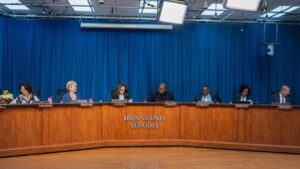
Leon County School Board reorganization ceremony
“This is a continuation of something that’s existed in our community to support our schools for the last 24 years, so it is not a new tax or new initiative it is simply maintaining what we’ve had in place,” Hanna said of the half-penny tax.
The half-penny sales tax does not apply like a property tax. The collection is a sales tax, meaning half a penny is collected from every $1 spent in any capacity where sales tax is usually applied, like retail stores.
In practice, for a $100 purchase, 50 cents would go to schools. The total generated by sales taxes is boosted by tourists, who pay for hotels, meals, gas and shopping, even though they don’t live in the county.
During the April 13 review, the board heard from department heads on how the sales tax money is used and how much has been doled out over the course of five years.
The district tracks capital spending on a rolling five‑year planning cycle required by state law.
Here are the categories covered by the tax dollars and how funding is typically spent during a reporting period:
- Safety and security: Surveillance cameras, school intercom systems, and key card access controls costs nearly $8 million every five years to replace aging equipment and upgrade systems to current standards.
- Technology and information systems: Digital software systems, equipment, and online applications costs on average $61 million every five years.
- Transportation: School bus replacements, GPS systems and operational expenses cost about $36 million every five years.
- Maintenance: Floor and roof projects, HVAC system repairs and replacements and general maintenance cost nearly $64 million every five years.
- Construction: Renovations, new construction projects and operations cost on average about $200 million every five years. Examples include major renovations at Rickards High and Fairview Middle, as well as districtwide roof, HVAC and safety repairs.
Ultimately, if the measure isn’t approved by voters, the district will face a deficit of $621 million over the next 15 years, Hanna said.
Since it was first approved in 2002, it has not been rejected by Leon County voters.
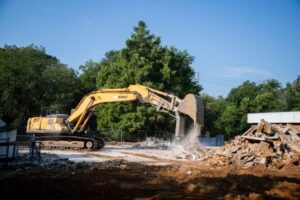
Construction at Griffin Middle School is well underway as of Thursday, June 13, 2024.
“Needless to say, things would come to a halt,” Hanna said about the potential impacts if the tax is eliminated.
Schools that have been renovated include Rickards High School, Fairview Middle School, Griffin Middle School, Nims Middle School, Hartsfield Elementary School, and Leon High School.
Soon Raa and Cobb middle schools will have new gyms, cafeterias and classroom wings. Between 2028 and 2043, the district is anticipating renovations at 12 schools including Kate Sullivan and Riley elementary schools, Montford and Deerlake middle schools, and Chiles and Godby High.
During Monday’s meeting, board members asked for revisions to the ballot language that was presented. After the board approves the wording, it will vote to send the draft to the county which will inevitably place it on the ballot. According to state law, the county commission cannot veto the resolution.
“This needs to say what it’s going towards,” school board member Laurie Cox said, seeking clarity on the wording.
The draft was developed with input from Steve Vancore, a Tallahassee based pollster and president of Clearview Research. He was previously hired under a contract with the Florida Education Association on behalf of the Leon Classroom Teachers Association to survey voter attitudes toward the tax and an additional property tax levy that could support teacher salaries.