

Some Microschools in Limbo While Awaiting New Federal Tax Credit Rules
The74 | By: Linda Jacobson | July 9, 2026
Public schools are beginning to imagine ways they can benefit from the new Federal Scholarship Tax Credit, after the Treasury Department clarified last month that district students will be eligible for scholarships.
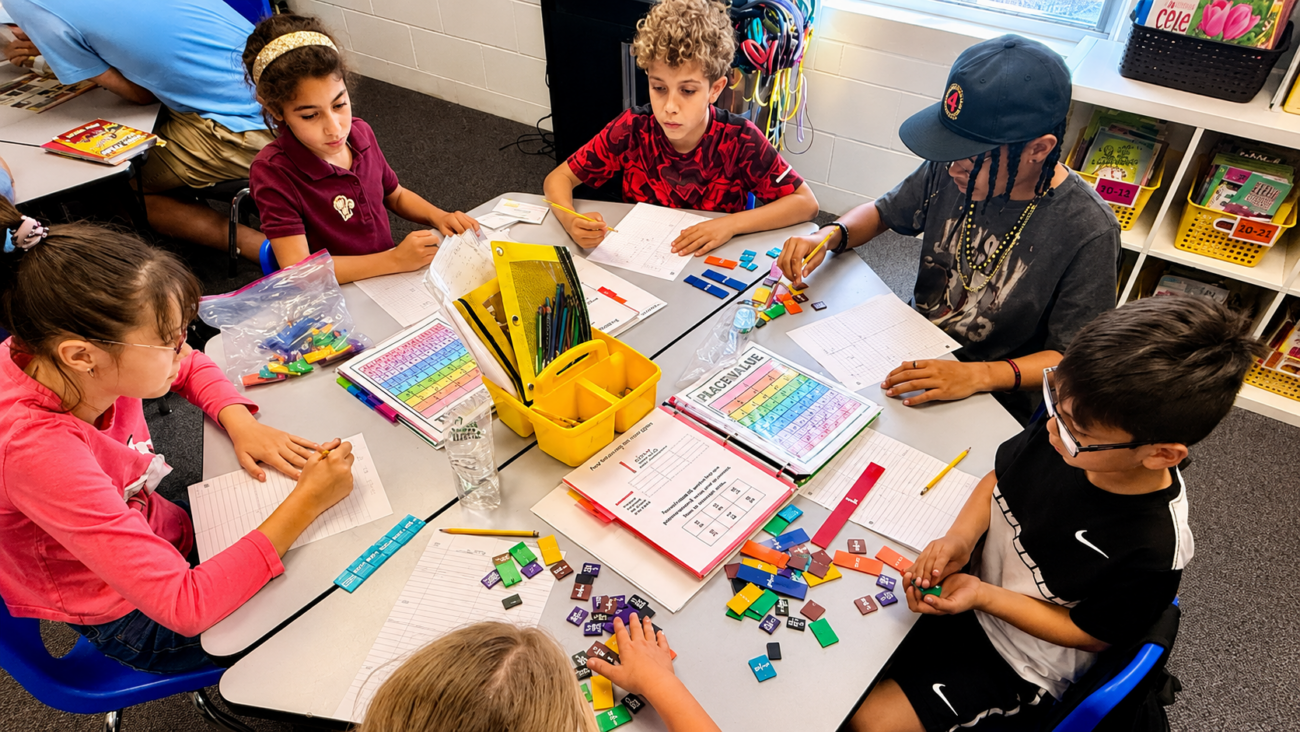
But for microschools, a growing segment of the private school market, the initial guidance from federal officials has left school leaders worried they could be left out.
The law says that students can use scholarships for expenses at a public, private or religious school. But many microschools operate outside of their state’s private school sector — as tutoring centers, homeschool groups and learning pods. Depending on state law, they may or may not be classified as private schools.
In his June 9 comments, Kevin Salinger, the deputy assistant secretary for tax policy, added that “a homeschool would be treated as a school if it is treated as a school under state law.”
His comments have left some microschool leaders scratching their heads.
Even if a state decides to opt in to the new program, “it is my concern that some will exclude microschools,” said Don Soifer, CEO of the National Microschooling Center, who is closely monitoring the issue.
To him, Congress’ intent was clear. The legislation states that if a student is eligible to attend a public K-12 school, then they will qualify for a scholarship as long as their family’s income doesn’t exceed 300% of the area median income, a high bar. Florida, Ohio and Tennessee are among the states that plan to participate in the program but have microschools that don’t fall under the private school umbrella. Some who advocated for passage of the law say microschool leaders should stay tuned for more information.
“We think Treasury misspoke or is misinterpreting the statute,” said Jim Blew, a former Department of Education official who is working to implement the new program. “It’ll all be cleared up by the time they issue the rules for 2027.”
The Treasury Department did not respond to requests for comment.
‘In the hands of the states’
Under the program, which starts next year, taxpayers who donate to a nonprofit scholarship granting organization will get a dollar-for-dollar credit, up to $1,700. Opponents, including Sen. Mark Kelly, an Arizona Democrat, want Congress to repeal the program, and the teachers unions are pressuring Democratic governors to opt out. They note that Salinger, the Treasury official, said states won’t be able to “impose” restrictions on SGOs. They can’t, for example, only approve nonprofits that offer scholarships to public school kids and not approve those that serve students attending private schools.
Other Democrats, like former Education Secretary Arne Duncan and Jorge Elorza, CEO of Democrats for Education Reform, have urged blue state governors to opt in. They argue that the program “opens the door to new, private donations, at no cost to taxpayers, that can support students in public and nonpublic settings alike.”
Cecilia Retelle Zywicki, founder of LearningSpring, which is building a system for states to track SGOs and payments, expects the Trump administration to stay out of the debate over how states define a school.
“Details like this are going to remain in the hands of the states,” she said. “The Treasury has made it clear in actions and words that oversight and compliance will remain with the states.”
‘A bummer’
That means even in red states that already intend to participate, some students could be left out.
“It’s a bummer because I know it would help the families,” said Tonya Kipe, who runs Kipe Academy in Winter Haven, Florida, as a nonprofit tutoring center out of a Methodist church.
She’s among those microschool founders who prefer not to organize as a private school. In addition to the microschool, which serves 36 students, she offers afterschool tutoring and a monthly science workshop. Becoming a more formal private school, she said, might require them to find a different facility and add testing requirements
As a former second grade teacher and mother of two boys, she knows how students can have vastly different learning needs. Her older son, she said, is the “compliant one,” while her younger son wasn’t motivated by public school routines like earning points for reading books. She launched her own school in 2021 to break out of a “cookie cutter” approach to education.
The families who signed up for her microschool were looking for the same thing.
“They like the flexibility of being able to just be here for academics from 8 to 11:30 and then join us for field trips if they want to,” she said. While many in her program already use Florida’s various private school choice options, she said the federal program could allow them to “double up” on tutoring, buy more supplies or add other supplemental programs.
arge microschool networks, like KaiPod Learning, are preparing for a patchwork approach across the country.
With locations in 21 states, KaiPod has 91 affiliated schools, about half of them private schools. The others operate as less-formal learning pods or co-ops, said CEO Amar Kumar.
Kaipod will add about 40 more schools next school year, a third of them in Texas, where the state’s new Education Freedom Accounts program launches this fall. With that growth, he thinks the percentage of private schools in the network will likely climb to 65%.
Microschools, he said, are moving toward “more formalized structures” as public funding for private school choice expands.
“Our view is that this is healthy for the microschool movement,” he said. “Families want flexibility and personalization, but they also want confidence that the school is stable, accountable and able to access available funding.”
With roughly 1,000 microschools across the country, the Prenda network helped introduce the public to the model during the pandemic when sites began to pop up across Arizona. While there are Prenda microschools in nearly every state, founder Kelly Smith said the organization has focused on expanding sites, like those in Texas, where they qualify as private schools and families can apply for public funds.
“Wealthy families already participate in microschools by paying out of pocket,” he said. But the federal program “has the potential of allowing lower and middle class families to send their kids to microschools.”
He said he was “baffled” that some states were saying no to additional federal funds.
“That is something governors almost never do,” he said.