

Trump administration pledges policy to match dietary guidelines
Food Fix | January 7, 2026
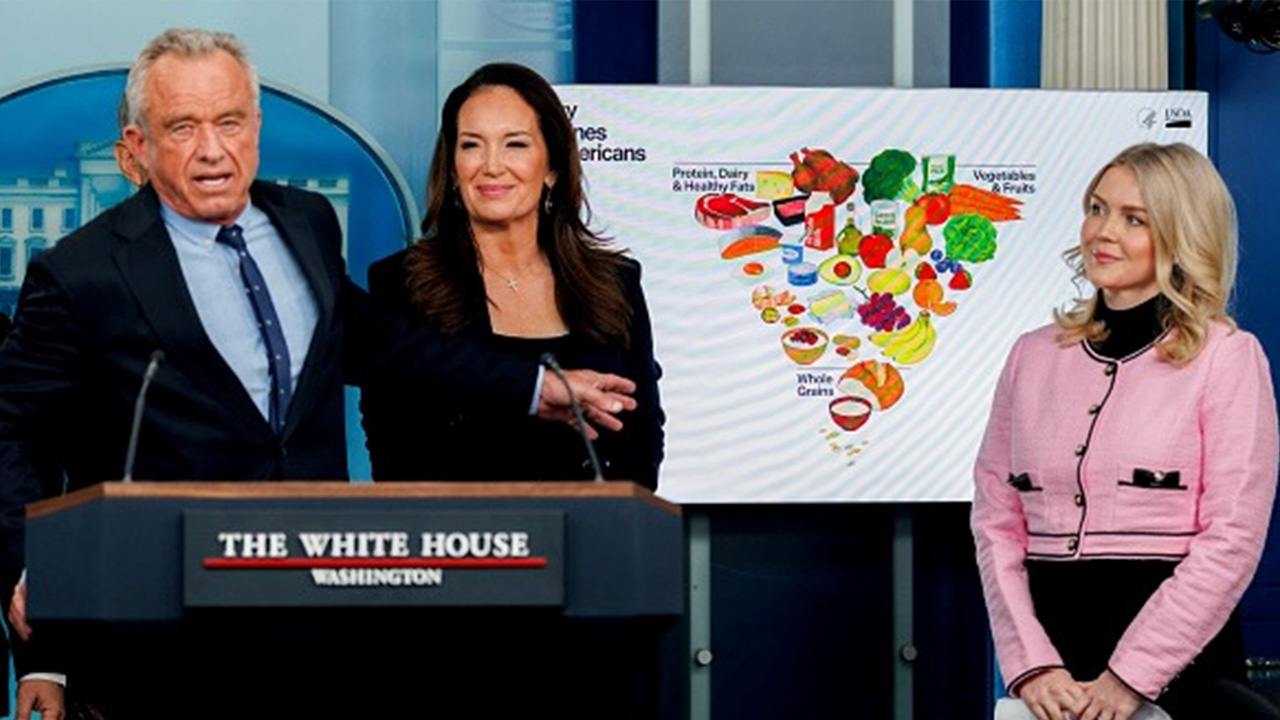
HHS Secretary Robert F. Kennedy Jr. and Agriculture Secretary Brooke Rollins said Wednesday that the Trump administration will make federal nutrition programs follow updated dietary guidelines.
Big changes could be coming for federal nutrition programs that feed tens of millions of Americans and cost billions in taxpayer dollars each year.
As they rolled out new dietary guidelines at the White House on Wednesday — recommending more protein, less sugar and less highly-processed food — HHS Secretary Robert F. Kennedy Jr. and Agriculture Secretary Brooke Rollins both said that the Trump administration will now turn its focus to ensuring federal nutrition programs follow the new guidelines.
The pledges are notable in an administration that has so far shied away from new regulations, sticking mostly to shifts in rhetoric and voluntary corporate pledges on things like ditching synthetic food dyes.
“Today begins the work of aligning those programs with affordable, whole, nutrient dense food,” Kennedy said in the White House briefing room. “Implementation requires coordination across the government. I’m working with many of my fellow cabinet secretaries to deliver results.”
Rollins echoed the same and for the first time explicitly said that USDA plans to re-do the regulations governing school meals — which provide meals for millions of children and cost taxpayers north of $20 billion per year.
“Today begins the first day now in a recalibration of the rules, whether it’s school lunches, whether it’s the SNAP program, whether it’s veterans … our prison system … now we begin the process of implementing and redrafting the rules to reflect what these new dietary guidelines for Americans actually are doing to our food system.”
“There is a lot of work to do,” Rollins continued. “Nothing changes overnight, but as I think we’ve proven, this administration moves very, very quickly … so you’ll begin to see some real changes coming very soon.”
Top priority:
School meals are likely the first area of focus for these policy changes — though overhauling this program would almost certainly require a major infusion of resources from Congress.
Programs like the National School Lunch Program — AKA the largest restaurant chain in America (yes, really) — are required by law to align with the dietary guidelines, but it can take several years for the regulations to catch up to the changes. In the case of limiting added sugars, for example, it took more than a decade. Schools are only now phasing in added sugars limits after the 2015-2020 Dietary Guidelines for Americans first recommended that no more than 10 percent of calories should be from added sugars.
The guidelines unveiled by the Trump administration are even stricter on added sugars, recommending that no one meal should contain more than 10 grams of added sugars, further stating that “no amount of added sugars or non-nutritive sweeteners is recommended or considered part of a healthy or nutritious diet.” It also recommends children largely avoid added sugars until age 10 (fourth or fifth grade).
The guidelines urge Americans to “avoid highly processed, packaged, prepared, ready-to-eat, or other foods that are salty or sweet, such as chips, cookies, and candy that have added sugars and sodium (salt). Instead, prioritize nutrient-dense foods and home-prepared meals. When dining out, choose nutrient-dense options.”
Drastically reducing added sugars and “highly processed” foods would force massive changes across school meals programs, which currently rely heavily on processed foods to feed millions of children at an affordable price point.
Political shifts:
Changing nutrition standards for school meals has always been deeply political. When former first ladyMichelle Obama championed a major effort to update school nutrition standards some 15 years ago, there was a huge fight in Washington. Republicans fought tooth and nail against many of the changes. The political dynamics have changed, however. Recent polling shows that large majorities of Republicans, Democrats and independents support changes like curbing processed foods in school meals. Still, it would be a huge lift to do so — most schools lack the resources, staffing and infrastructure to rely heavily on scratch cooking.
“School nutrition programs are where the vision of the DGAs becomes reality for the 30 million children eating school meals each day,” said Stephanie Dillard, president of the School Nutrition Association, in a statement Wednesday. “Congress has a tremendous opportunity to improve the health of America by investing resources to help schools expand scratch cooking, serve more fresh, local foods and further positive momentum in cafeterias. SNA looks forward to working with the Administration to update school meal standards and provide consistent federal rules that benefit students nationwide.”
The School Nutrition Association earlier this week released a survey showing that schools face “extensive financial and operational challenges for school meal programs” as they try to reduce their reliance on ultra-processed foods.
Ultra processed or highly processed?
As predicted, the dietary guidelines do not technically use the term “ultra-processed foods” — in a confusing twist, the government went with “highly processed foods” instead. In a lengthy appendix document, USDA and HHS explain:
“While there is currently no consensus definition for highly-processed or ultra-processed foods, a joint USDA-FDA effort to establish a uniform definition is underway,” the agencies note. “For the purposes of this report, highly processed foods (HPF) are defined as any food, beverage, or engineered food-like item that is made primarily from substances extracted from food (eg refined sugars, grains, starches or oils) and/or containing industrially manufactured chemical additives.”
What’s next: All eyes will be on the Trump administration to come up with a plan. Rollins said Wednesday updating what’s served in school meals is “the single most important move forward,” but suggested other nutrition programs like WIC and SNAP could follow. Nutrition programs under the Department of Defense and Veterans Affairs could also face changes, officials said.