
Group of Pasco charter schools wants district to share tax revenue faster
Some charter leaders want nothing to do with the challenge, which seeks less than $3 million.
Tampa Bay Times | By: Jeffrey S. Solochek | November 9, 2026
A group of four Pasco County charter schools, including one that has not yet opened, has filed a formal state complaint against the school district over property tax revenue sharing.
The schools — Plato Academy Trinity, Imagine School at Land O’ Lakes, Imagine School at Trinity and Discovery Academy of Science — contend the district is breaking state law by not giving them their share of a voter-approved property tax until the district has received the money.
The law requires districts to distribute the money regardless of whether they have collected it, John P. Leombruno, lawyer for the charter schools, wrote in his 14-page complaint to the Florida Division of Administrative Hearings, filed Nov. 4. Just because the district doesn’t like that idea does not mean it does not have to comply, he added.
Superintendent John Legg, who co-founded Dayspring Academy charter schools, which his wife still runs, did not disagree that the schools are entitled to the revenue.
“We firmly believe that all public schools deserve equal funding and equal timely distribution of those funds,” Legg said Monday in a prepared statement. “Pasco County schools immediately distributes funds to charter schools upon receipt.
“We simply do not advance funds that the district has not yet received.”
School board members supported this approach in April, when they asked the Florida Attorney General’s Office for an advisory opinion on the issue, and again in July. The office has not provided an opinion.
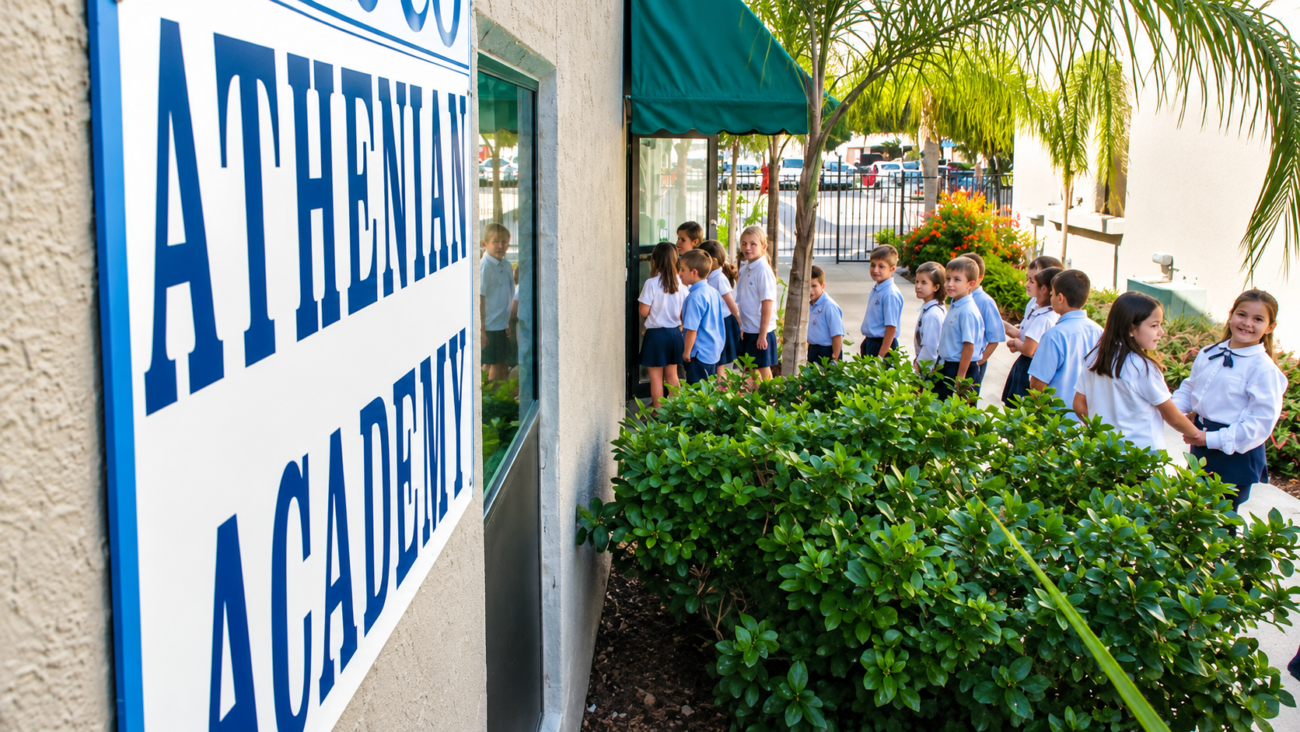
Jim Mathieu, longtime chairperson of Athenian Academy of Technology and the Arts in New Port Richey, took no issue with the district’s stance. His is one of the district’s charters that did not join the complaint, despite using the same law firm that filed it.
Mathieu said his school has enough money in its accounts to ensure that it can afford its operating expenses regardless of whether the district provides the referendum revenue in July, November or February. He suggested that charter schools suing their sponsoring district over what he deemed a technicality serves no useful public purpose.
“The school board has been doing a really good job,” he said. Mathieu, a lawyer, added that he did not look in depth at the other charters’ claims “because I didn’t care,” saying he opposed the idea in principle.
The four charters’ argument centers on state statute, which sets forth that districts must make the revenue-sharing payments “monthly or twice a month, beginning with the start of the sponsor’s fiscal year.”
Leombruno contended such clear language leaves districts no discretion in when they send the checks to their charter schools.
Any delay places a financial burden on the charter schools, he added — one that need not exist.
The charters’ share is less than $3 million. Meanwhile, the lawyer noted, the district had a general fund balance of nearly $200 million as of July 1, when the payments should have begun.
That means the district has “substantial general-fund resources” to meet the mandate, yet it has chosen not to. Charter schools with “substantially smaller budgets and thus less of an ability to absorb temporary cashflow restrictions” suffer the consequences, Leombruno wrote.
A hearing could be scheduled within the next two months.